
How Many Senate Seats Are Up for Election in 2026? The 35-Seat Map Explained
Thirty-five of the 100 US Senate seats are on the November 3, 2026 ballot: 33 regular Class II races and two special elections in Florida and Ohio. Here is the state-by-state map and why the number matters.
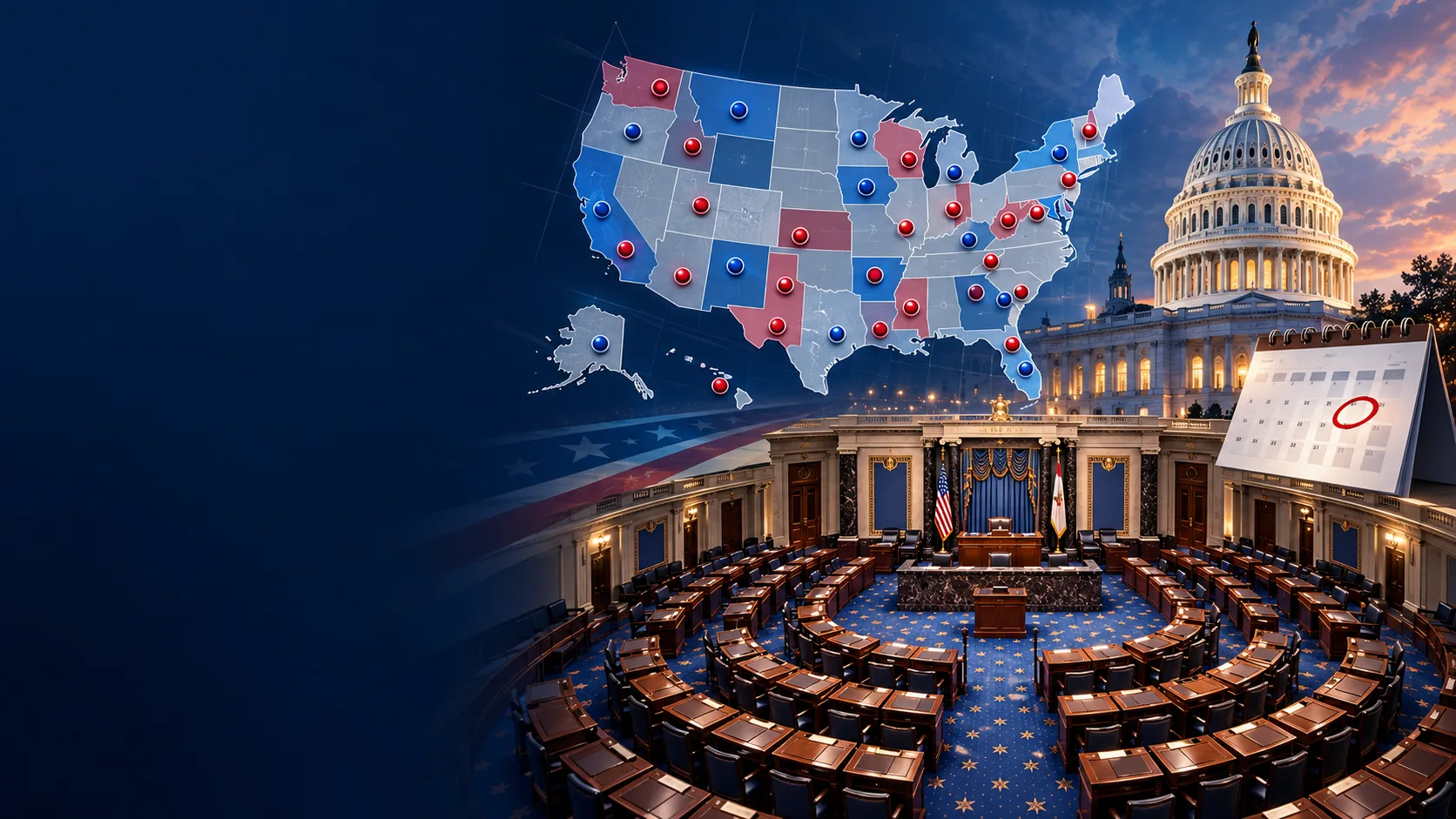
The short answer is 35. Thirty-five of the 100 seats in the United States Senate are scheduled to be decided in the 2026 midterm elections on Tuesday, November 3.
That total has two parts: 33 regular elections for the Senate’s Class II seats, plus two special elections in Florida and Ohio. The special elections are included because those seats are being filled for the remainder of their terms rather than through the normal six-year cycle.
Why are 35 Senate seats up in 2026?
Senators serve six-year terms, but the Senate is divided into three classes so that roughly one-third of the chamber appears on the ballot every two years. In 2026, the regular cycle is the Class II group. A vacancy can add a special election to the ballot, which is why the total is higher than the 33 seats in the regular class.
The 2026 election is therefore not a vote for all 100 senators. Voters in the states listed below will choose a senator in a regular race or a special contest, while the remaining Senate seats are not scheduled for election this year.
Which states have Senate elections in 2026?
The 33 regular-election states are Alabama, Alaska, Arkansas, Colorado, Delaware, Georgia, Idaho, Illinois, Iowa, Kansas, Kentucky, Louisiana, Maine, Massachusetts, Michigan, Minnesota, Mississippi, Montana, Nebraska, New Hampshire, New Jersey, New Mexico, North Carolina, Oklahoma, Oregon, Rhode Island, South Carolina, South Dakota, Tennessee, Texas, Virginia, West Virginia and Wyoming.
Florida and Ohio are the two additional special-election states. Together, that produces the 35-seat 2026 Senate map: 33 regular races plus two special elections.
How many Republican and Democratic-held seats are on the ballot?
The regular 33-seat map includes 20 Republican-held seats and 13 Democratic-held seats, according to the current 2026 election reference. The two special-election seats in Florida and Ohio are also Republican-held going into the election. That means 22 Republican-held seats and 13 Democratic-held seats are included in the broader 35-seat ballot map.
Those numbers describe the starting position, not a prediction. A seat being held by one party does not guarantee that party’s candidate will win, and an open seat can create a different contest from a race in which an incumbent is running again. The final control of the chamber will depend on the full national balance, the seats that change party hands and any vacancies or certification issues.
Why does the 2026 Senate map matter?
The Senate is a 100-member chamber, so a majority usually requires 51 seats. Because only 35 seats are on the ballot, neither party needs to win all the races to shape the next Senate. A small number of competitive contests can decide whether the majority has room to pass legislation, confirm nominees and set the agenda for committees.
The map also has a different political texture from the House. House control is decided across all 435 districts, while Senate contests are statewide races. That makes turnout, candidate quality, state-level issues and the local political environment especially important. A party can win a national vote advantage without winning every state where a Senate seat is contested.
Regular election or special election: what is the difference?
A regular Senate election chooses a senator for the next full six-year term attached to that seat. The 33 Class II races fall into that normal cycle, although the candidates and incumbent situations vary from state to state.
A special election fills an unexpired term after a vacancy. Florida and Ohio are listed separately on the 2026 map because the winner is completing the remainder of the current term rather than beginning a new six-year term at the same time as every Class II winner. The ballot rules, candidate field and term details should be checked with the relevant state election office.
What should voters watch before Election Day?
The first useful question is not only “which party holds the seat?” It is also “who is actually on the ballot?” Incumbents may retire, candidates may win or lose a primary, and some races may have special-election rules. State election offices remain the authority for certified candidate lists, polling locations, registration deadlines and final results.
For a race-by-race view, the Bharat Metro Locator 2026 US Election guide tracks the Senate states in separate pages and labels the current status as a guide until official returns are available. That distinction matters: a candidate directory or a campaign forecast is not the same as a certified winner.
When will the 2026 Senate results be known?
Vote counting takes place state by state after the polls close, and the timing of a projected result can vary. A media outlet may call a race before the state certifies it, while a close contest may remain uncalled for longer. The Federal Election Commission notes that state election offices are responsible for certifying results, so official results should be treated separately from projections and live newsroom updates.
The most useful number to remember is simple: 35 Senate seats are up for election in 2026. Of those, 33 are regular Class II races and two are special elections in Florida and Ohio. The state-by-state map explains where the contests are; the final balance of the Senate will show what they changed.
Frequently asked questions
How many Senate seats are up for election in 2026?
Thirty-five seats are on the 2026 general-election map: 33 regular Class II seats and two special-election seats.
Is every Senate seat on the ballot in 2026?
No. The Senate has 100 seats, but the six-year class system means only about one-third are normally contested every two years. Vacancies can add special elections.
When is the 2026 US Senate election?
The regularly scheduled federal general election is Tuesday, November 3, 2026. State primary, runoff and ballot deadlines can be different.
Are the House and Senate numbers the same?
No. All 435 House seats are up for election in 2026, while 35 Senate seats are on the map.
Sources and editorial note
This original explainer uses the U.S. Postal Service’s 2026 Key Elections bulletin for the federal election date and state list, the Federal Election Commission’s election information for certification guidance, and the 2026 Senate race reference for the regular-versus-special-election and party-held breakdown. Candidate lists, forecasts and results can change; state election offices remain the final authority.