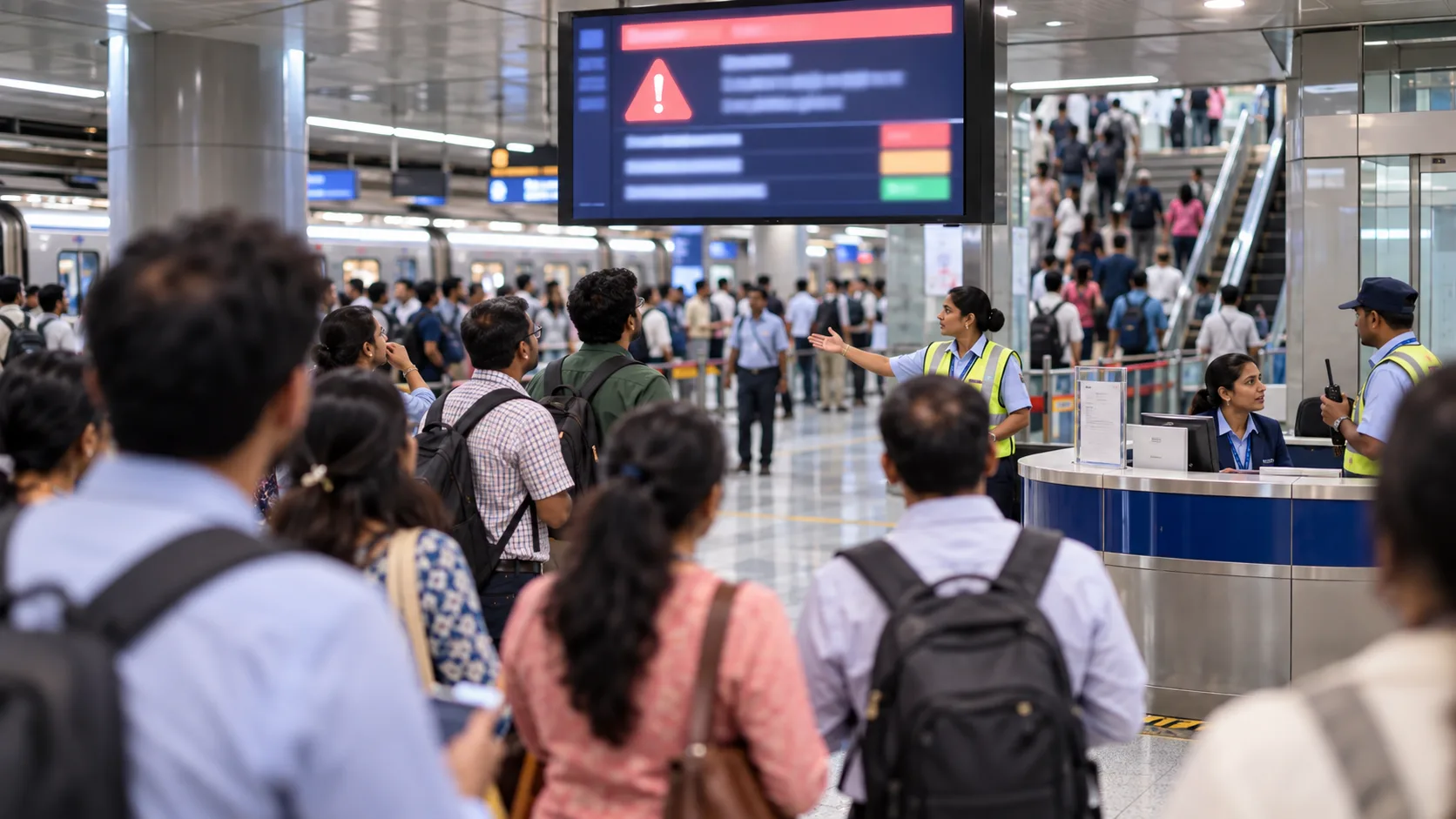
Delhi AQI hits 350 as parts of the city enter severe zone: commuter update
Delhi’s AQI reached 350 at 4 pm on November 3, while eight monitoring locations recorded severe air quality. Here is what the latest report means for Delhi-NCR commuters and which official travel updates to check.
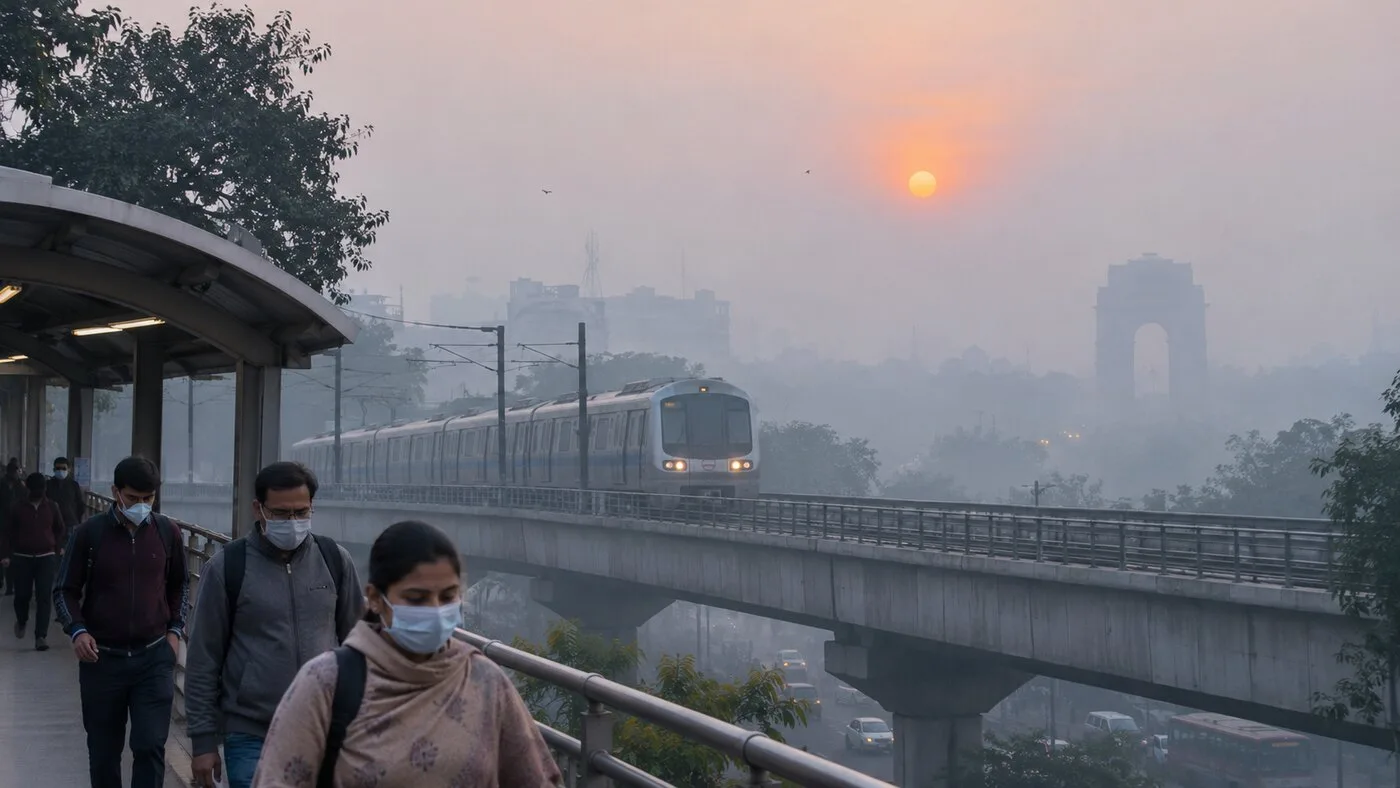
Delhi’s air pollution worsened on Tuesday, November 3, with the citywide Air Quality Index (AQI) reaching 350 at 4 pm, according to a Times of India report published on Wednesday. The report said eight monitoring locations had entered the “severe” category, while the overall city reading remained in the “very poor” band.
For people travelling across Delhi-NCR, the update is a reminder to check current official advisories before setting out. It does not, by itself, indicate a change to Delhi Metro services.
What the latest report says
The Times of India reported that Jahangirpuri recorded an AQI of 462, the highest among the listed locations. Other areas in the severe category included Punjabi Bagh (449), Delhi Technological University (445), Alipur (430), Vivek Vihar (425), Mundka (422), Bawana (421) and North Campus (405). Safdarjung, used as a base monitoring station, recorded “very poor” air quality.
The report cited the Indian Institute of Tropical Meteorology’s decision support system, which estimated that emissions from stubble burning in neighbouring states contributed 8.5% of Delhi’s pollution on Monday. The model estimated a rise to 15.5% on Tuesday, with the contribution expected to reach 20% on November 4 and 22% on November 5. These are model estimates reported by TOI, not direct measurements of an individual commuter’s exposure.
Weather conditions were also described as unfavourable for dispersing pollutants. IITM expected Delhi’s air quality to remain very poor or deteriorate to severe over the following six days. GRAP-II restrictions were already in force from Monday, the report said.
What this means for Delhi commuters
A citywide pollution reading is not a Metro service alert. The reported AQI figures do not confirm a station closure, a change in train frequency or a route disruption. Commuters should check the latest notices from Delhi Metro Rail Corporation and relevant authorities for operational updates before travelling.
A Metro journey may still include an outdoor walk, a feeder-bus connection, a road transfer or time spent waiting outside. Those parts of a trip can differ by neighbourhood and time of day, so a citywide figure should not be treated as a live reading for every station or street.
Checks to make before heading out
Confirm travel and pollution updates
Check official DMRC channels for service notices and the relevant government air-quality or GRAP advisories for current restrictions. Recheck close to departure, since pollution and travel notices can change during the day.
Plan the full trip, including transfers
Allow time for the first and last mile and check whether a feeder or road connection is affected by local conditions. Do not assume that a pollution update means Metro operations have changed unless the operator issues a separate notice.
Follow official health guidance
People with health concerns should follow advice from their medical professional and current public-health guidance. This report provides a transport-focused summary and is not medical advice.
The key takeaway
Delhi’s AQI was 350 at 4 pm on November 3, while eight locations reported severe readings, according to the Times of India. Forecasts cited in the report pointed to continued poor conditions. For commuters, the practical step is to check current air-quality advisories and separate them from official Metro service updates.
**Source:** The Times of India, “November pain: Air quality severe in parts of Delhi,” by Kushagra Dixit / TNN, published November 4, 2026. This BML article is an independently written summary based on the cited report.